
Tag: oracle
-
Oracle Database Security Central

If you already run Audit Vault and Database Firewall and just found out Oracle now calls something “Database Security Central,” this post answers the question you probably have first: is this a new thing to buy, or is it what AVDF becomes? Since this question tends to come with two more attached to it, I…
-
Managing TDE Encryption Keys Across a Hybrid Data Guard Estate: External Keystores and Cross-Region Key Replication

When your primary lives on on-premises Exadata and your standby sits in a different region or cloud, the hardest part of Transparent Data Encryption is not the encryption itself. It is deciding where the master key lives, how both sides reach it, and what happens to that key when you fail over. This is the…
-
EBCDIC Compatibility in Oracle 26ai: The Mainframe Re-Platforming Bridge

Special thanks to Virginia Arroyo, Oracle Cloud Migration Director, for her review of this article. There is a quiet assumption baked into almost every modern database conversation, and it goes something like this: everything is Unicode now, so encoding is a solved problem. For most greenfield systems, that is more or less true. But walk…
-
Exadata X11MV: 50% More VM Density and What It Means for Your Cloud Exadata Consolidation Strategy

I’ve been tracking the Exadata Cloud Infrastructure release notes for a while now, and the June 30 entry caught my attention in a way that went beyond the usual quarterly feature list. Oracle has quietly released a new infrastructure generation for Exadata Database Service on Dedicated Infrastructure that changes the consolidation math for a lot…
-
Oracle 26ai Deprecations: What’s Going Away

If you’ve been running Oracle Database long enough, you’ve seen deprecation notices before. Usually they’re a heads-up in the release notes, maybe a year or two to adapt. Oracle 26ai takes a more thorough approach: it’s streamlining the platform by retiring features whose functionality has been superseded by more modern, more capable alternatives. This is…
-
Hands-On Workbook: ExaDB-XS Snapshots, Thin Clones, and Ephemeral Environments
This workbook details a Proof of Concept using Oracle Exadata Database Service for Exascale, showcasing its capabilities for efficiently creating child environments without storage duplication. It includes step-by-step exercises on managing PDB snapshots, thin clones, and Refreshable PDBs, highlighting their advantages in quick provisioning and space utilization.
-
Your AI agent needs a Data Constitution, not just better prompts
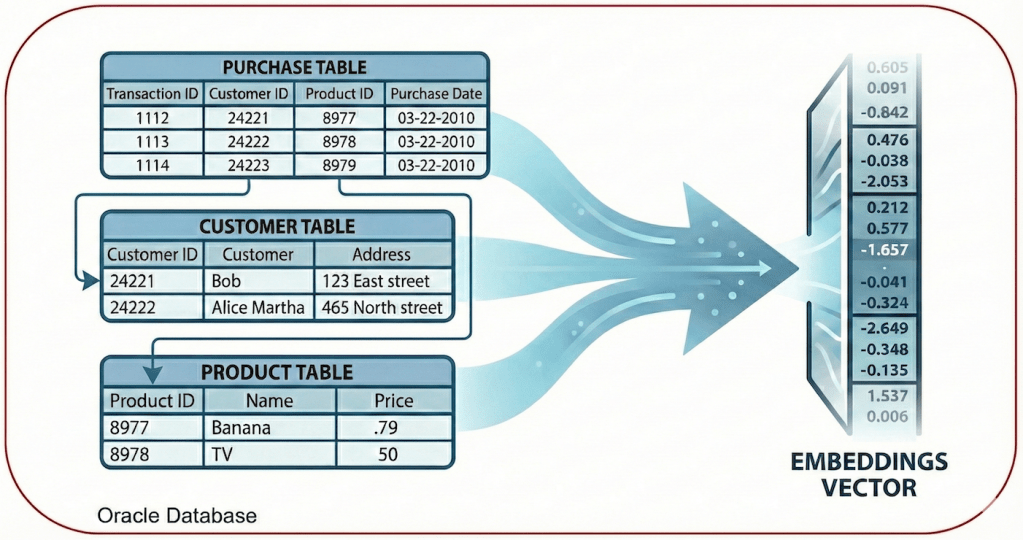
The article discusses the evolution of Artificial Intelligence towards Agentic AI, which are autonomous agents that can perform complex tasks. However, it highlights the fragility of these agents when they utilize poor-quality data from sources like flat files or vector databases. To enhance reliability, a “Data Constitution” is necessary, ensuring data integrity through a structured…
-
Why Scalability is the Silent Killer of AI (And How Exadata Solves It)

The enterprise data management landscape is evolving from relational databases managing structured data to accommodating unstructured data and AI advancements, particularly through Large Language Models. As data fragmentation and integration complexities rise, Oracle AI Database 26ai aims to address these challenges by consolidating transactional and analytical workloads into a unified platform on Exadata. It features…
-
Understanding Exascale Volume Snapshots in Oracle
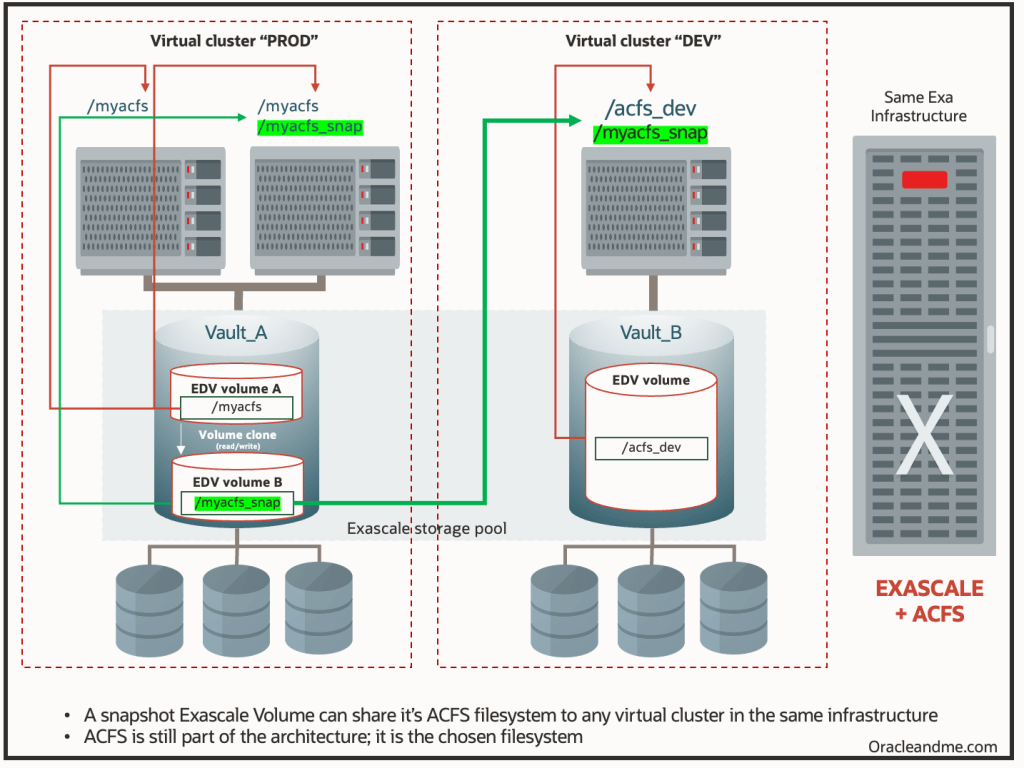
Exadata’s shift to Exascale storage introduces enhanced cloning features at volume and database levels, including Exascale Volume Snapshots and PDB Snapshot Clones. This article outlines their differences, application scenarios, and improvements over ASM and ACFS. Exascale fosters efficient, space-saving snapshotting that supports cross-cluster sharing and simplifies backup strategies.
-
New Multitenant architectures available with Exascale
The transition from ASM to Exascale in Exadata systems enhances extent mapping significantly, simplifying operations that were previously complex or limited. This article discusses the limitations of snapshot clones in multitenant environments under ASM and explores various workarounds used to mitigate these challenges. Exascale addresses these issues effectively, allowing for straightforward refresh processes of non-production…

