
LATEST POSTS
-

Oracle 26ai Deprecations: What’s Going Away
If you’ve been running Oracle Database long enough, you’ve seen deprecation notices before. Usually they’re a heads-up in the release notes, maybe a year or two to adapt. Oracle 26ai takes a more thorough approach: it’s streamlining the platform by retiring features whose functionality has been superseded by more modern, more capable alternatives. This is…
-

Quantum-Resistant Encryption in Oracle AI Database 26ai: A DBA’s Practical Guide
If you’ve been running Oracle Database for more than a few years, you’ve heard the phrase “quantum threat” before. You’ve also probably filed it under “that’s a problem for 2032” and moved on to the backup window that’s actually broken right now. You can’t move on anymore. Some people are intercepting and storing your encrypted…
-
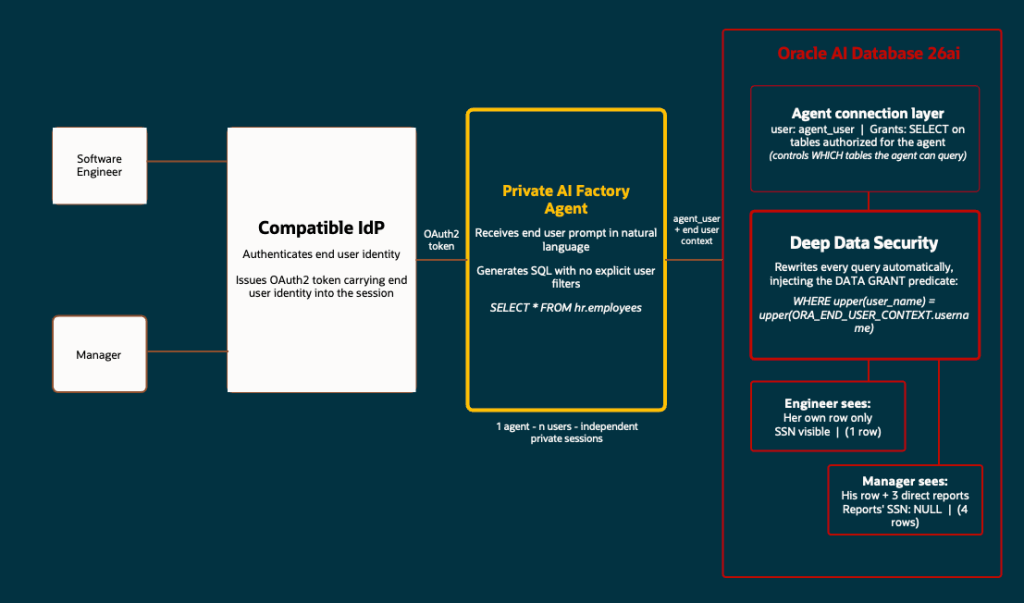
Oracle Deep Data Security: when the database knows who is really asking
Database architects have relied on traditional security models to manage database access, which becomes problematic with AI’s capability to autonomously generate SQL queries. Oracle’s Deep Data Security (DDS), introduced in 26ai, addresses these security concerns by integrating identity-aware, row-and-column-level access control directly into SQL. It utilizes new SQL statements like CREATE END USER, CREATE DATA…
-
Hands-On Workbook: ExaDB-XS Snapshots, Thin Clones, and Ephemeral Environments
This workbook details a Proof of Concept using Oracle Exadata Database Service for Exascale, showcasing its capabilities for efficiently creating child environments without storage duplication. It includes step-by-step exercises on managing PDB snapshots, thin clones, and Refreshable PDBs, highlighting their advantages in quick provisioning and space utilization.
-
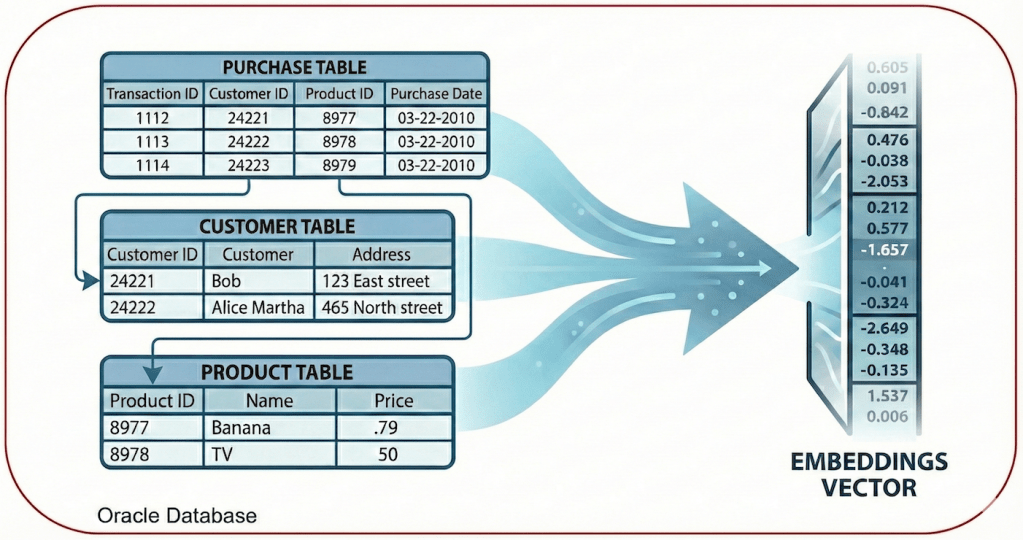
Your AI agent needs a Data Constitution, not just better prompts
The article discusses the evolution of Artificial Intelligence towards Agentic AI, which are autonomous agents that can perform complex tasks. However, it highlights the fragility of these agents when they utilize poor-quality data from sources like flat files or vector databases. To enhance reliability, a “Data Constitution” is necessary, ensuring data integrity through a structured…
-

Why Scalability is the Silent Killer of AI (And How Exadata Solves It)
The enterprise data management landscape is evolving from relational databases managing structured data to accommodating unstructured data and AI advancements, particularly through Large Language Models. As data fragmentation and integration complexities rise, Oracle AI Database 26ai aims to address these challenges by consolidating transactional and analytical workloads into a unified platform on Exadata. It features…
ORACLE AND ME NEWSLETTER
Sign up to receive an email whenever I publish a new post. Eventually several times a month.

