
LATEST POSTS
-
Understanding Exascale Volume Snapshots in Oracle
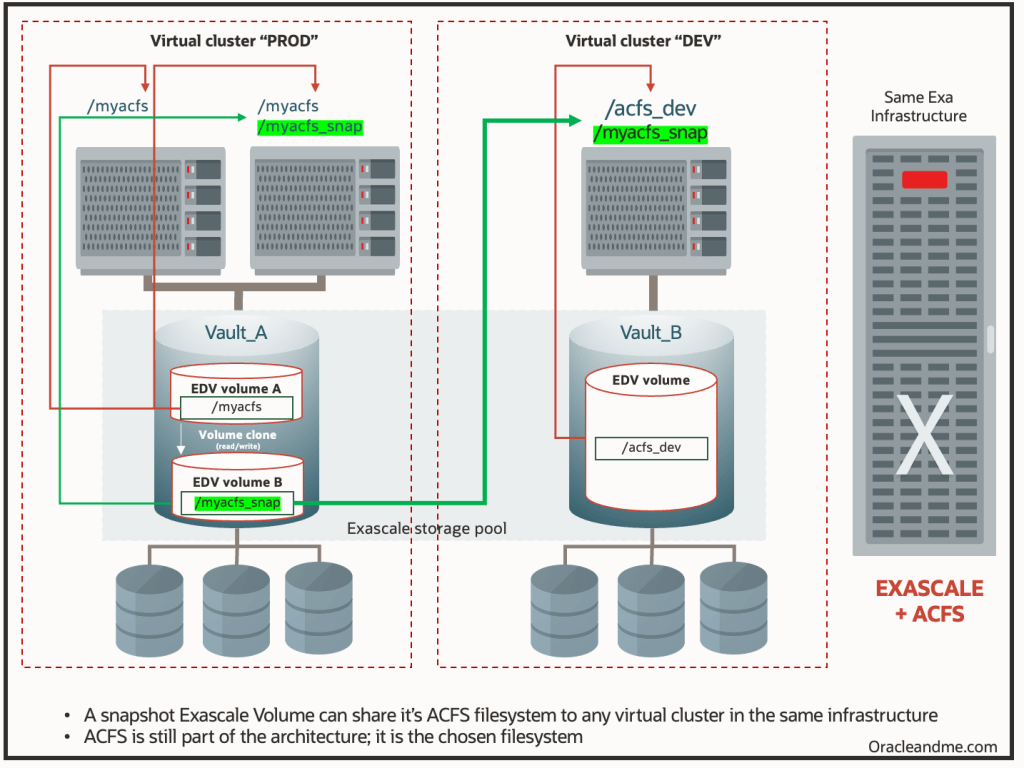
Exadata’s shift to Exascale storage introduces enhanced cloning features at volume and database levels, including Exascale Volume Snapshots and PDB Snapshot Clones. This article outlines their differences, application scenarios, and improvements over ASM and ACFS. Exascale fosters efficient, space-saving snapshotting that supports cross-cluster sharing and simplifies backup strategies.
-
New Multitenant architectures available with Exascale
The transition from ASM to Exascale in Exadata systems enhances extent mapping significantly, simplifying operations that were previously complex or limited. This article discusses the limitations of snapshot clones in multitenant environments under ASM and explores various workarounds used to mitigate these challenges. Exascale addresses these issues effectively, allowing for straightforward refresh processes of non-production…
-

Exascale (3/3) – New ExaDB-XS OCI Service
This three-part series on Exascale highlights its role in enhancing Oracle’s Exadata services. The Exadata Database Service on Exascale Infrastructure (ExaDB-XS) offers virtual infrastructure, lower minimum resource commitments, and easier scaling compared to dedicated infrastructure. Exascale software is transformative, aiming to streamline storage and optimize resource management for varying workloads.
-
Exascale (2/3) – New Exascale Architecture
The article highlights advancements and limitations of Automatic Storage Management (ASM) in Exadata systems over 20 years. It discusses areas needing improvement, including resizing diskgroups, thin cloning, and redundancy. Oracle’s new Exascale software aims to address these issues, promising enhanced capabilities for storage management. Future articles will detail Exascale’s architecture and cloud services.
-
Exascale (1/3) – Why ASM Needed an Heir Worthy of the 21st Century
The article highlights advancements and limitations of Automatic Storage Management (ASM) in Exadata systems over 20 years. It discusses areas needing improvement, including resizing diskgroups, thin cloning, and redundancy. Oracle’s new Exascale software aims to address these issues, promising enhanced capabilities for storage management. Future articles will detail Exascale’s architecture and cloud services.
-
Moving to OCI: On-premises Non-CDB to OCI PDB in a single step and minimum downtime
The content discusses the migration of Non-CDB databases to Oracle Cloud Infrastructure (OCI) while minimizing downtime. It outlines a simple procedure for converting Non-CDB to PDB, emphasizing the use of the noncdb_to_pdb.sql script. Key aspects include creating refreshable PDBs from Non-CDBs, managing archive logs, and ensuring compatibility between databases. It also highlights the importance of…
ORACLE AND ME NEWSLETTER
Sign up to receive an email whenever I publish a new post. Eventually several times a month.

