
Tag: 19c
-
Asymmetric dataguard with multitenant (part 3/3)

This series concludes with insights on managing PDB behavior in physical dataguard, emphasizing the importance of thoughtful strategies before executing an operation. It discusses proactive steps to address potential problems and works through examples of how to ensure dataguard synchronization without unnecessary downtime. The importance of detailed planning, adjustment of ENABLED_PDBS_ON_STANDBY parameters, and possible alternatives…
-
Asymmetric Dataguard with multitenant (Part 2)
This is the second part of the article series on asymmetric physical dataguard with multitenant. You can find the first part in this link. We begin this second part with a clear understanding of two concepts that we have learned when creating PDBs and performing UNPLUG/PLUG operations in a physical DG primary CDB: To these…
-
Asymmetric Dataguard with multitenant (Part 1)
Following my previous post about PDB hot clones in a Data Guard environment, I received several questions from you about the different scenarios one might encounter in a physical Data Guard setup with PDBs. I believe the best way to address this is by delving into one of the most complex cases, which is the…
-
19c – The mystery of Snapshot Carousel (Ch.2)
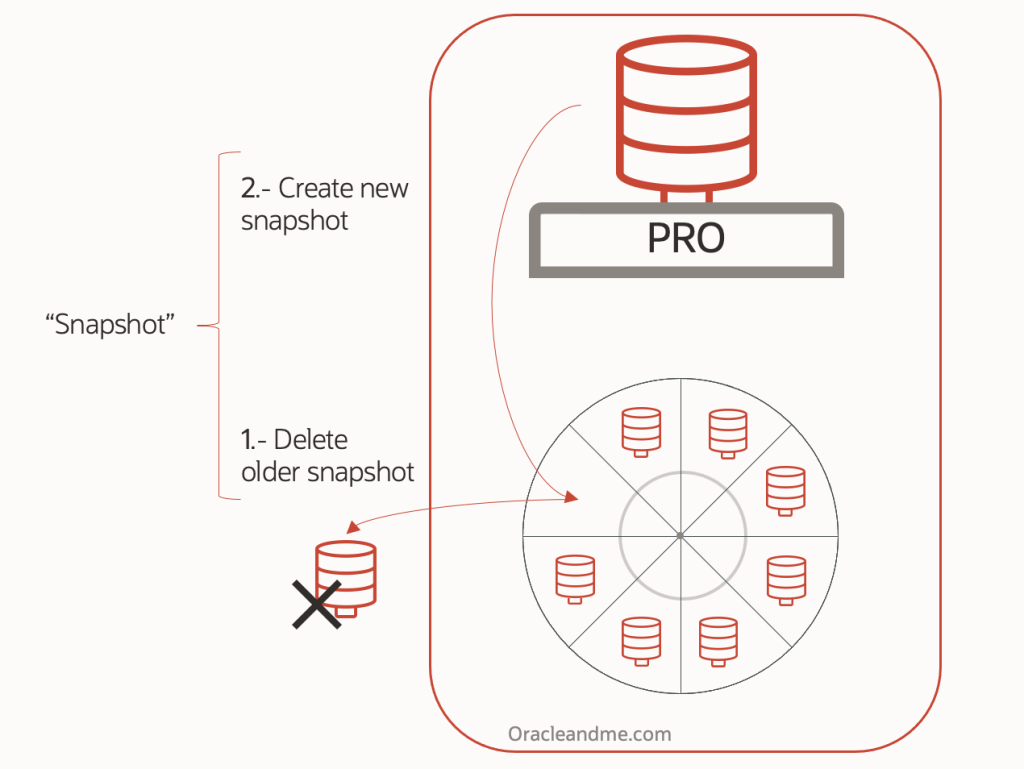
In the previous chapter we explained the reasons why the snapshot carousel feature still has significant limitations in Oracle 19c Release. While I particularly think the feature concept is certainly interesting, these limitations will probably prevent us from implementing such architecture. However, if we could know the SQL commands that snapshot carousel executes – since…
-
19c PDB clones from Physical Standby

In previous articles we already explained how easy is to use a Refreshable PDB to re-create non production environments. We could periodically refresh it in the nonProd CDB, and use it to deploy the nonProd PDBs; thus avoiding a full database copy through the network. We could create full clones from it, create snapshot clones…
-
19c PDB “Snapshot copy” series- Chapter 3 – dNFS

In previous chapter 2nd we tested how easy is to implement PDB snapshot copies with a very simple setup. We leveraged this fantastic storage-based technology which is ACFS and it’s copy-on-write clones. In the example we used in that previous post, we had both the refreshable PDBs and the snapshot copies in the same CDB,…
-
19c PDB “Snapshot copy” series- Chapter 2 – ACFS

Today we will focus on a simple practical exercise where we are going to demonstrate how easy it is to create snapshot copies with a minimal infrastructure. We start from a 19c EE single instance database and ASM storage. This database consists of the CDB “CDBA” and the PDB “PDB1”, running on a virtual machine.…
-
19c PDB “Snapshot copy” series- Chapter 1

We can probably all agree that container databases (PDBs – “multitenant”) architecture has clearly improved DBAs quality of life. Most of the maintenance operations around the database lifecycle have become so simplified that activities such as cloning a database can now be done with a single, very simple, SQL command. And this without giving up…
-
19c Basic Multitenant operation combinations

The CDB (container database) architecture, also called multitenant, is the new standard in Oracle database architecture. So much so, that nonCDB databases are de-supported from versions 21c onwards. This implies that both in its singletenant model (one user PDB per CDB) and in its multitenant model (several user PDBs per CDB), PDB operations are going…
 Oracle and Me