
Category: Multitenant
-
Moving to OCI: On-premises Non-CDB to OCI PDB in a single step and minimum downtime
The content discusses the migration of Non-CDB databases to Oracle Cloud Infrastructure (OCI) while minimizing downtime. It outlines a simple procedure for converting Non-CDB to PDB, emphasizing the use of the noncdb_to_pdb.sql script. Key aspects include creating refreshable PDBs from Non-CDBs, managing archive logs, and ensuring compatibility between databases. It also highlights the importance of…
-
Asymmetric dataguard with multitenant (part 3/3)

This series concludes with insights on managing PDB behavior in physical dataguard, emphasizing the importance of thoughtful strategies before executing an operation. It discusses proactive steps to address potential problems and works through examples of how to ensure dataguard synchronization without unnecessary downtime. The importance of detailed planning, adjustment of ENABLED_PDBS_ON_STANDBY parameters, and possible alternatives…
-
Asymmetric Dataguard with multitenant (Part 1)
Following my previous post about PDB hot clones in a Data Guard environment, I received several questions from you about the different scenarios one might encounter in a physical Data Guard setup with PDBs. I believe the best way to address this is by delving into one of the most complex cases, which is the…
-
23c – Hybrid Read-Only PDBs

Several application’s maintenance tasks in an database require keeping users out of it. For instance, performing a parallel recompilation of objects after a code update. In these cases one of the most useful tools is to use dynamic services, which allow us to disconnect clients in a controlled, convenient and centralized manner. However, even today…
-
23c – Simplified PDB hot cloning in a Physical Dataguard environment

In one of the previous articles I superficially mentioned a relevant limitation in the combination of Multitenant + Dataguard in 19c: It simply cannot execute a synchronized hot cloning (primary cloning cascading to the standby). Today we are going to address that issue in detail, and we will discover an important improvement that we find…
-
23c – Floating PDBs – The Lab

The main objective of this laboratory is to understand the behavior of PDBs (Pluggable Databases) and services based on their configuration, particularly focusing on a “floating PDBs” configuration. We are interested in observing if the clusterware properly distributes the PDBs and their services during startup, verifying the behavior in case of a node failure in…
-
23c – New RAC Floating PDBs
One of the fundamental milestones achieved by the Oracle Multitenant architecture (CDBs and PDBs) is the ability to online rebalance resources between databases; CPU, memory, and even IO (throughput or IOPS). For example, with multitenant, we can immediately rebalance free memory from one PDB to another; something that is currently impossible to do between two…
-
New Multitenant CPU management

Hello friends. Before starting this new article I want to thank you for the nice words and support you have shown for the blog. Today I bring you a topic that I particularly find really interesting. Maybe it is a bit long, but it is worth it. So make yourself a coffee and enjoy! Database…
-
19c – The mystery of Snapshot Carousel (Ch.2)
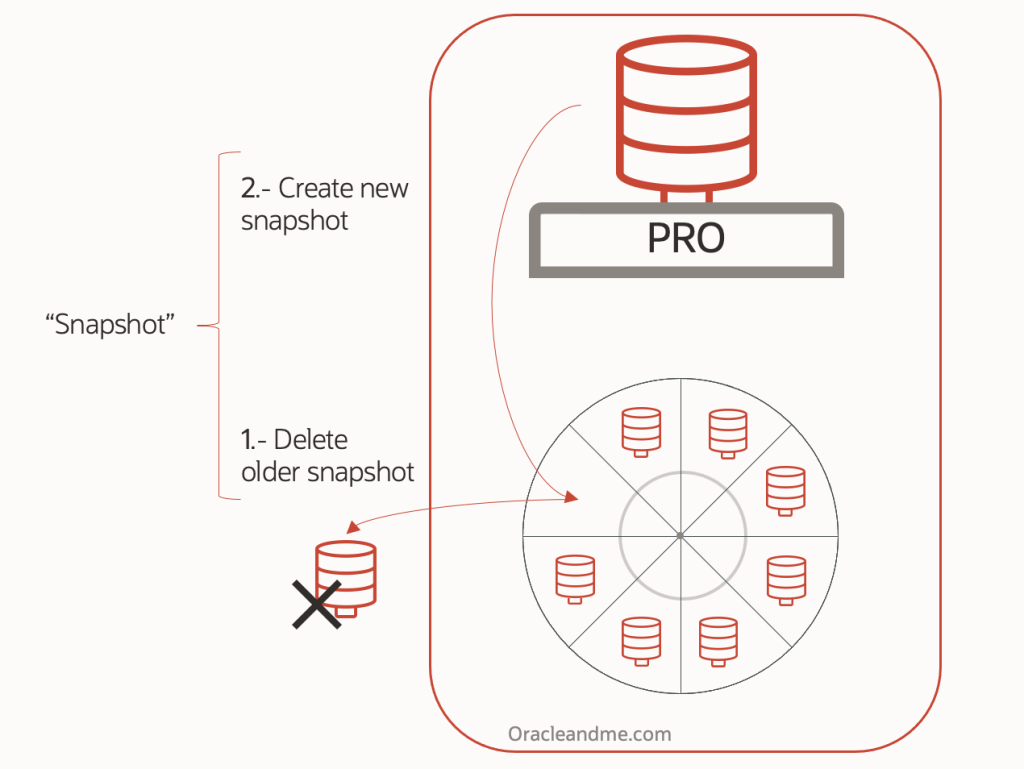
In the previous chapter we explained the reasons why the snapshot carousel feature still has significant limitations in Oracle 19c Release. While I particularly think the feature concept is certainly interesting, these limitations will probably prevent us from implementing such architecture. However, if we could know the SQL commands that snapshot carousel executes – since…
-
19c – The mystery of Snapshot Carousel (Ch. 1)
Oracle has taken a giant step forward with the introduction of the container architecture (aka multitenant). The core set of operations with PDBs is now well known to DBAs, who are beginning to see operations such as a “PDB hot clone” or “Refreshable PDBs” as part of their routine. But beyond that core set of…
 Oracle and Me