
Category: Exadata
-
Your AI agent needs a Data Constitution, not just better prompts
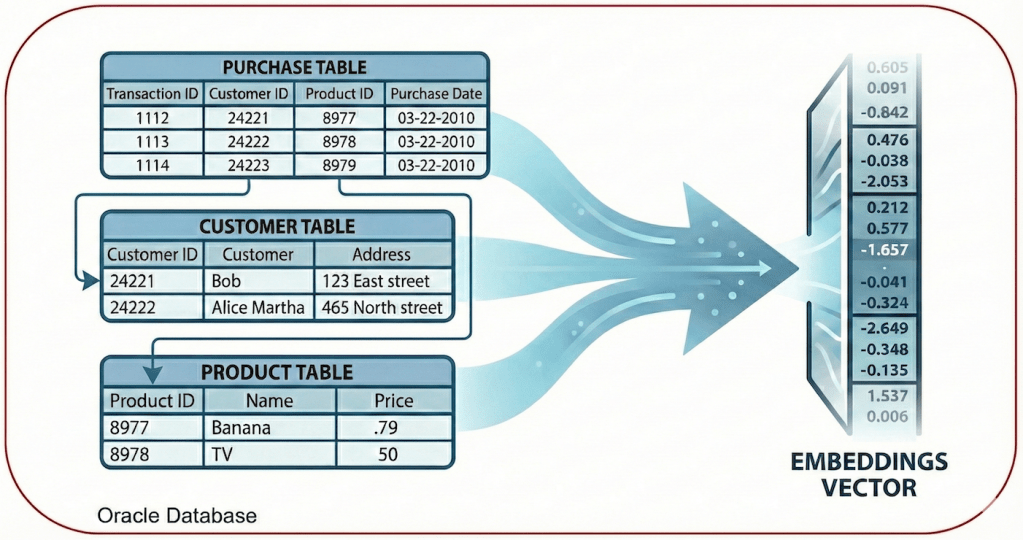
The article discusses the evolution of Artificial Intelligence towards Agentic AI, which are autonomous agents that can perform complex tasks. However, it highlights the fragility of these agents when they utilize poor-quality data from sources like flat files or vector databases. To enhance reliability, a “Data Constitution” is necessary, ensuring data integrity through a structured…
-
Why Scalability is the Silent Killer of AI (And How Exadata Solves It)

The enterprise data management landscape is evolving from relational databases managing structured data to accommodating unstructured data and AI advancements, particularly through Large Language Models. As data fragmentation and integration complexities rise, Oracle AI Database 26ai aims to address these challenges by consolidating transactional and analytical workloads into a unified platform on Exadata. It features…
-
Understanding Exascale Volume Snapshots in Oracle
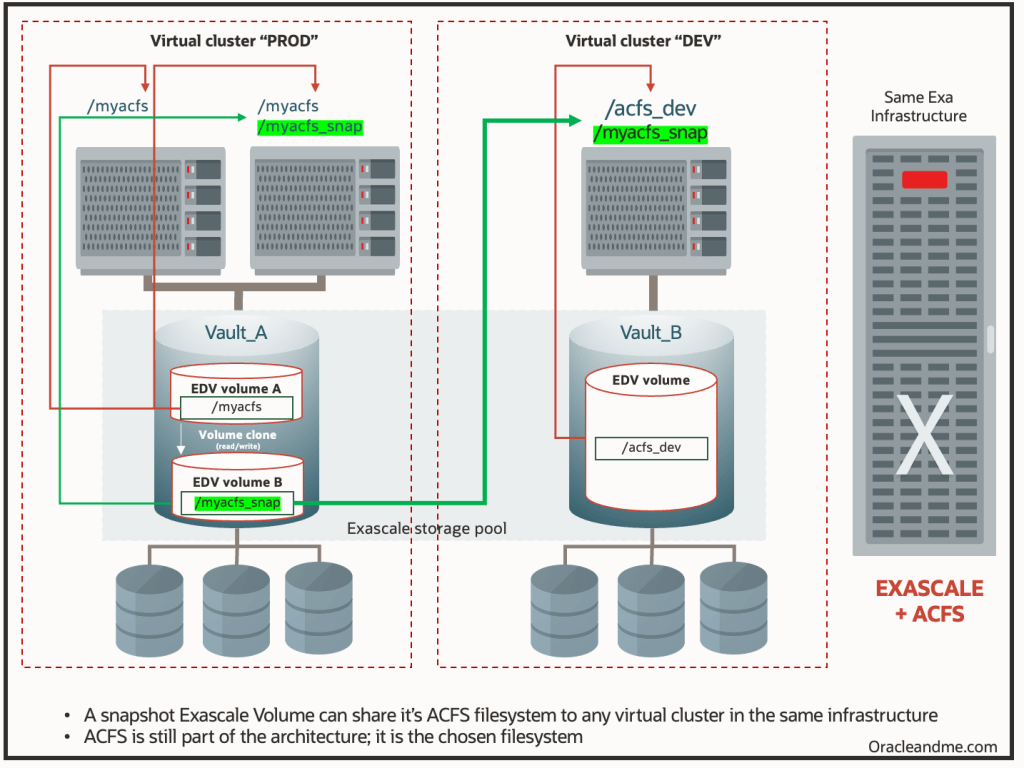
Exadata’s shift to Exascale storage introduces enhanced cloning features at volume and database levels, including Exascale Volume Snapshots and PDB Snapshot Clones. This article outlines their differences, application scenarios, and improvements over ASM and ACFS. Exascale fosters efficient, space-saving snapshotting that supports cross-cluster sharing and simplifies backup strategies.
-
New Multitenant architectures available with Exascale
The transition from ASM to Exascale in Exadata systems enhances extent mapping significantly, simplifying operations that were previously complex or limited. This article discusses the limitations of snapshot clones in multitenant environments under ASM and explores various workarounds used to mitigate these challenges. Exascale addresses these issues effectively, allowing for straightforward refresh processes of non-production…
-
Exascale (3/3) – New ExaDB-XS OCI Service

This three-part series on Exascale highlights its role in enhancing Oracle’s Exadata services. The Exadata Database Service on Exascale Infrastructure (ExaDB-XS) offers virtual infrastructure, lower minimum resource commitments, and easier scaling compared to dedicated infrastructure. Exascale software is transformative, aiming to streamline storage and optimize resource management for varying workloads.
-
Exascale (2/3) – New Exascale Architecture
The article highlights advancements and limitations of Automatic Storage Management (ASM) in Exadata systems over 20 years. It discusses areas needing improvement, including resizing diskgroups, thin cloning, and redundancy. Oracle’s new Exascale software aims to address these issues, promising enhanced capabilities for storage management. Future articles will detail Exascale’s architecture and cloud services.
-
Exascale (1/3) – Why ASM Needed an Heir Worthy of the 21st Century
The article highlights advancements and limitations of Automatic Storage Management (ASM) in Exadata systems over 20 years. It discusses areas needing improvement, including resizing diskgroups, thin cloning, and redundancy. Oracle’s new Exascale software aims to address these issues, promising enhanced capabilities for storage management. Future articles will detail Exascale’s architecture and cloud services.
 Oracle and Me